
 |
 |
 |
 |
 |
 |
 |
|
South & North day walks, October Swanage Meet, Swanage September Maintenance Meet, George Starkey Hut August Dartmoor Meet, Princetown July/August Summer Alpine Meet, Klosters July Wales Meet, Rhyd Ddu June Arran Meet, Lochranza May May Day Bank Holiday Meet Grinton April South day walk Somerset April North day walk Peak District March Southern day walk Hampshire February Southern day walk Chilterns Annual Dinner & AGM Glenridding |
|
This years return to Swanage brought the Roving Meet idea full circle back to where it started 6 years ago. Our accommodation at the YHA halfway up the hill towards Durlston Head in two ensuite bunk rooms proved a good choice for our group. David Clear and I were fortunate to be invited to stay at the Creasey s lovely smallholding farm in the New Forest on Thursday night. This allowed the three of us to discuss David s plans for next year s early September Trek meet at leisure. The results of this you will see in the 2027 Meets programme when it is distributed to members in early December.
The next morning we set off for the Isle of Purbeck leaving Steve to complete some of the many tasks that running a farm and accommodations bring with them.
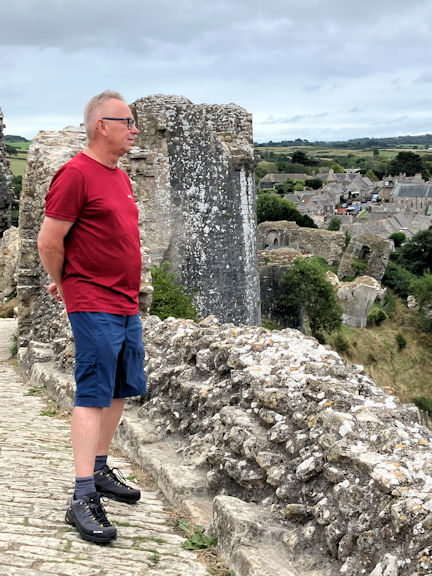
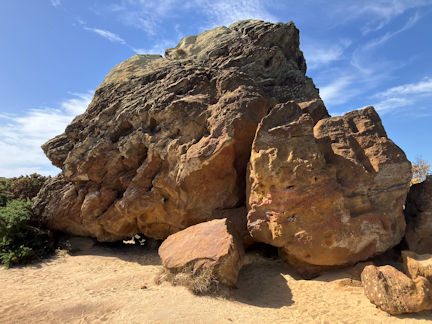
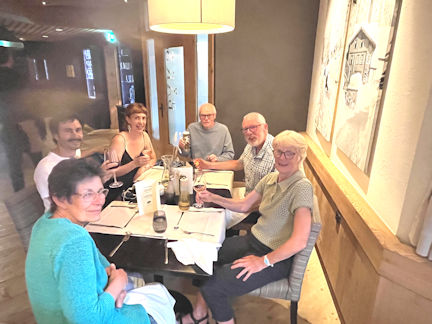
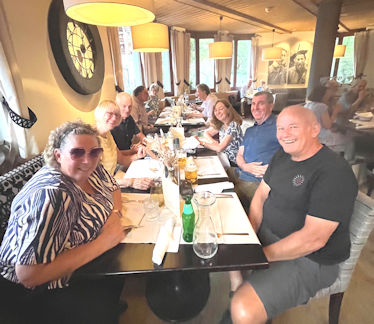
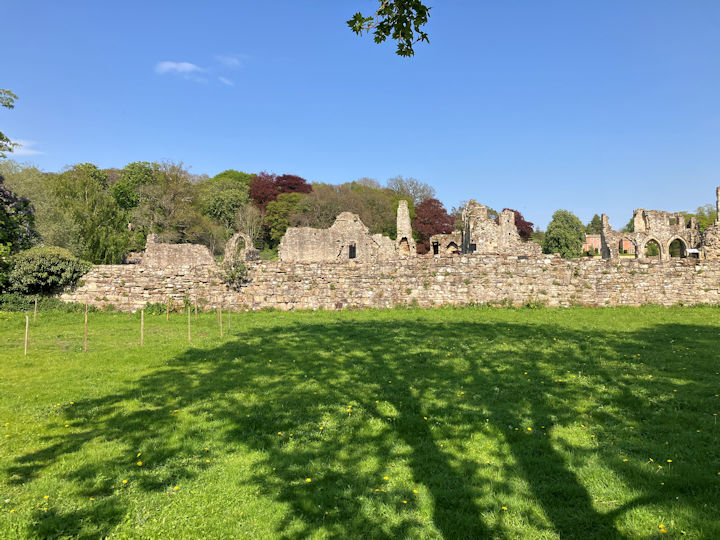
Friday evening everyone was able to enjoy an evening walk into town for their dinner and drinks of choice, and we were joined by James and Belinda who were staying in a hotel in the town too. Saturday morning having been joined by Paul and Mitch who had driven over for the day we found our way out of the back of the town through Townsend Nature Reserve and across the static caravan site to join the Priest s Way. On this stretch we were encouraged to take a slight detour following the Dinosaur Tracks sign on a gate to our right. Uncovered by local quarrymen in 1997 there are over 100 fossilized tracks preserved in a gently sloping flat layer of rock. Made roughly 140 to 145 million years ago by giant, long necked sauropods (likely Braciosaurus) moving across a shallow lagoon or mudflat.
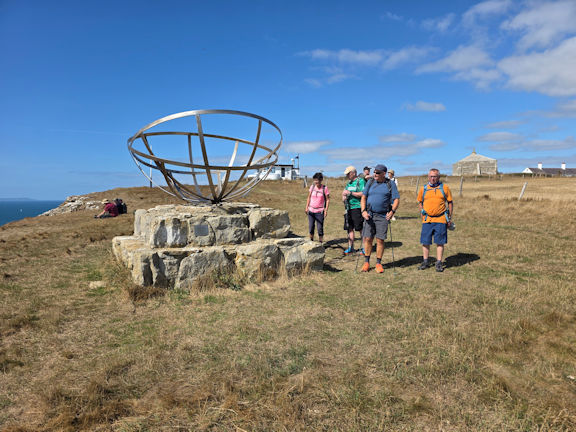
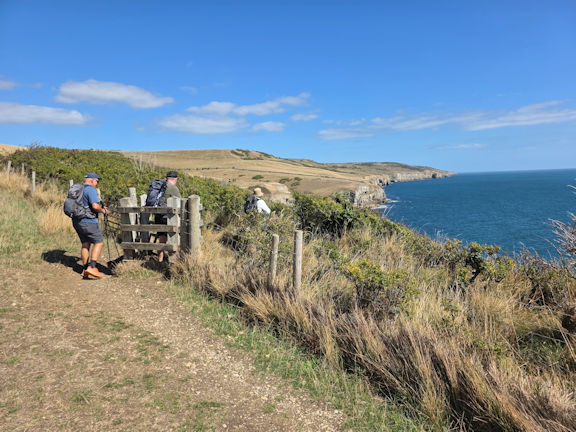
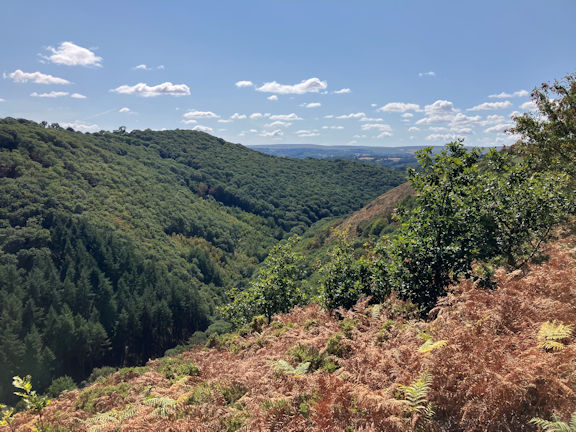
Views on Saturdays walk
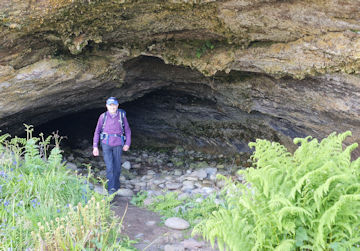
Heather made her way to Winspit, and I made my way to the South West Coast Path on the opposite side from Winspit Quarry and along to Hedbury, another coastal quarry, to watch a couple of rock climbers enjoying one of the upper landing sports climbs in the full sun. Continuing along the Coast Path to Dancing Ledge Paul caught me up, and we caught up with Heather just in time to go and have a look at the famous pool in the ledge itself. A large group of coasteerers were enjoying their training experience from the ledges below me. We were soon joined by everyone else and continued to Anvil Point Lighthouse, past the Tilly Whin Caves and found ourselves in the caf at the top of Durlston Head Castle for a refreshing drink before returning through the trees of Durlston Country Park back to the hostel. Saturday s evening meal was enjoyed at the Black Swan, where we were joined by James and Belinda who had also walked out to Dancing Ledge. My eldest son, Paul, popped in with his partner Maddy and their friend Duffy for a swift pint, and I managed to catch up with their day out coasteering from Dancing Ledge too.
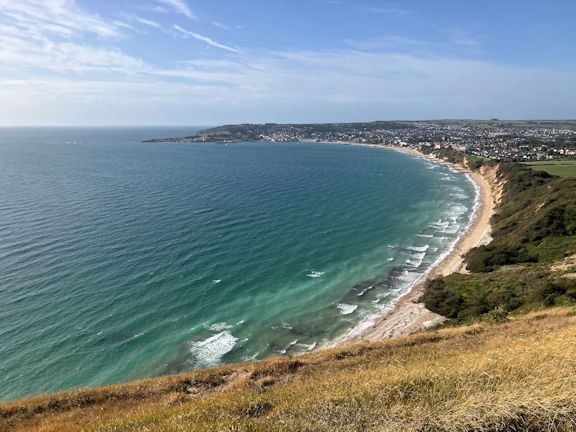
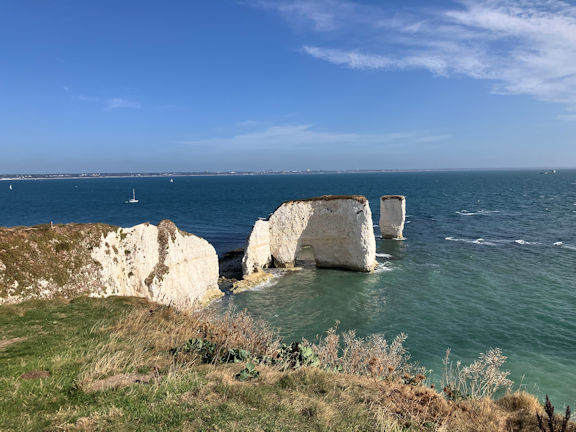
Leaving the hostel and making our way along the seafront on a glorious Sunday morning we were able to see people enjoying Swanage Bay at its best, although today s onshore breeze was making getting out there a tad more difficult. Two of the Swanage Gig Rowing Club boats were just coming back in from a training session, always a pleasure to watch. Making our way up through the housing in New Swanage we joined the South West Coast Path and continued up to Ballard Point where it joins the Purbeck Way. Here views of The Pinnacles and Old Harry came ever closer as we reached Handfast Point, admiring the stunning views of these chalk stacks and right out to the matching cliffs on the Isle of Wight.
Views on Sundays walk
We continued down to South Beach for a caf stop. Easy to see why families love this little secluded sheltered corner.
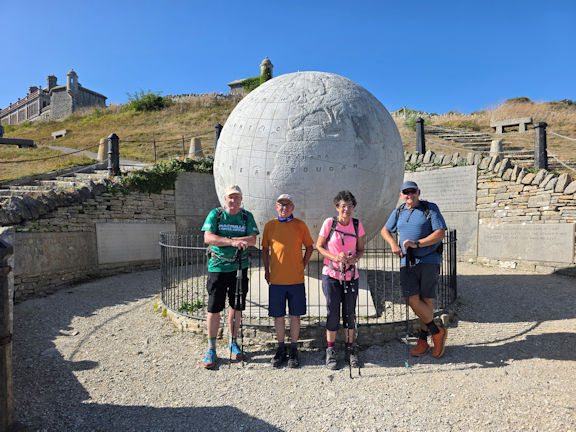
On Monday morning after dropping Celine off in Corfe I dropped David off at Wareham Station for his long train journey to Sunderland. Returning to Corfe I was able to enjoy the village before the visitor numbers peaked for a second time, visiting the little museum and joining Celine in one of the lovely cafes on the main street. Over a coffee and a piece of warm apple cake we decided to go to Kimmeridge to view the Pliosaur Museum first, before continuing to Lulworth Cove and Durdle Door. Steve Etches Museum was as fascinating as I had hoped. With the red flags flying the route to Lulworth was made a tad more exciting by the whump of artillery as we scooted past the camp and parked up. The Cove provided us with spectacular views and a pasty lunch to tide us up and over the hill to Durdle Door, another iconic Dorset landmark to add to Celine s first visit to this part of the country. Dropping Celine off at Wareham Station for her train back to London I was afforded a steady evening drive back to Nottingham, mindful as ever when I visit our stunning coastline of the words of John Masefields poem, Sea Fever. Attendees: David Clear, Margaret Moore, Heather Eddowes, Celine Gagnon, Simon Whatley, our local guide Steve Creasey and Andy Burton, plus staying nearby James and Belinda Baldwin, and day visitors Paul Stock and Mitch Sneddon. Report by Andy Burton |
|
Thirteen hard-working and conscientious members from both the ABM and the AC arrived from all over the country to give the Hut its annual August make-over. The usual scrubbing and cleaning tasks were done with gusto, and upstairs, the dormitories were soon mould-free, hoovered, windows cleaned and mattresses wiped. The weather was a bit mixed but most folk took some time out and enjoyed a walk in between showers.
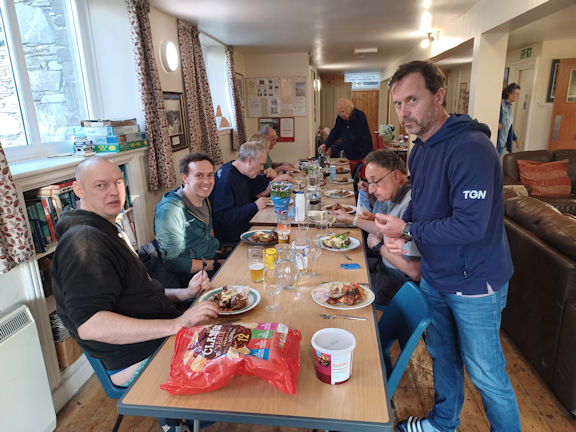
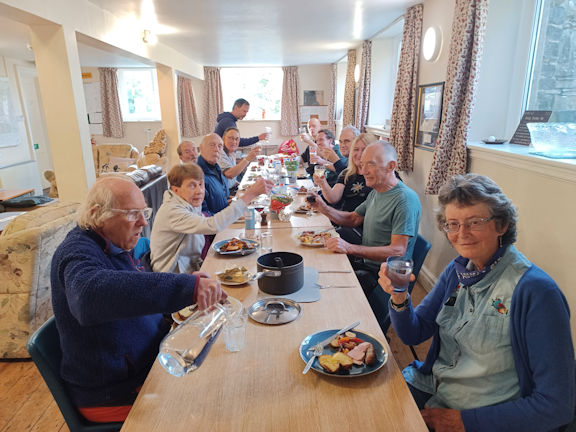
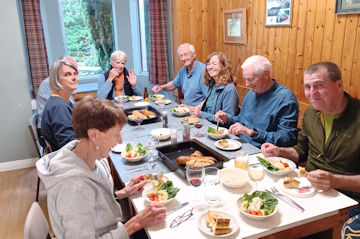
Communal dinner at the Hut after a hard days work
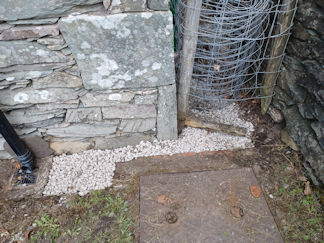
Downstairs, the kitchen was probably the most time-consuming and complicated job, with every cupboard and shelf needing emptying and cleaning, cutlery and pans sorted out and stoves and fridges wiped clean. No new mouse dirt was spotted, so hopefully the little blighters will stay outside, at least for a while, as I had to put traps down a few weeks ago, putting an end to three. The club has acquired a lovely new photograph depicting the Matterhorn, and this was duly hung on the wall of the lounge by its creator. The drying room walls received some necessary attention; the main problem was that the old plaster above the door was cracked, peeling and dirty. After a good scrub and a few coats of paint, it looks much better. Outside, drains were checked and one had to be cleaned out: not a job for the squeamish! Overhanging branches were removed and the grass cut all round.
Much heartfelt thanks and kudos to those who gave up their time and energy and in some cases, drove the length of the country, to work on our wonderful Hut this year. Attendees: Daniel Albert, Mike Dunn, John Vernon, Judy and Don, Sam Higginson, Andy Brook-Dobson, Rick Snell, Ian Bisset, Fi and Andy Bunn, Mike and Marian Parsons. Report by Marian Parsons, Hut Warden |
|
Dartmoor Meet, Princetown, 31 July- 3 August
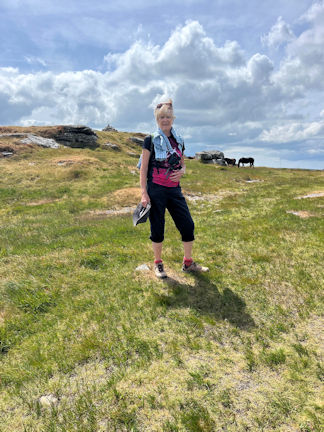
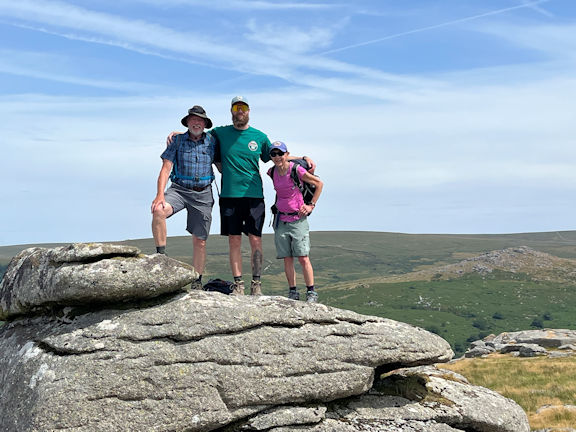
The Club s third visit to the Plume of Feathers was poorly attended in numbers, but in no way diminished in the walks completed by the four attendees and one day visitor.
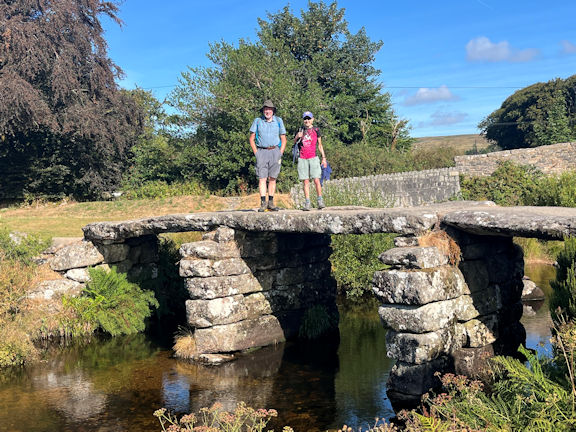
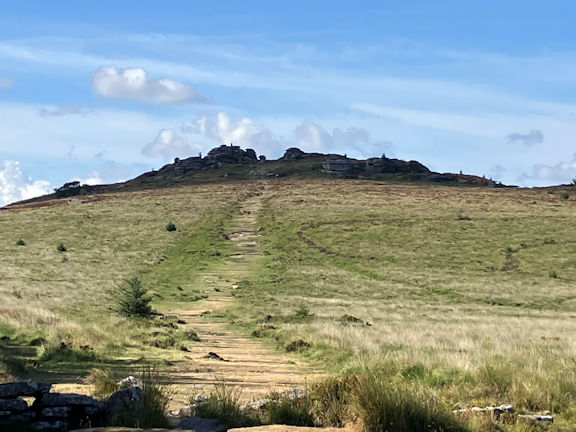
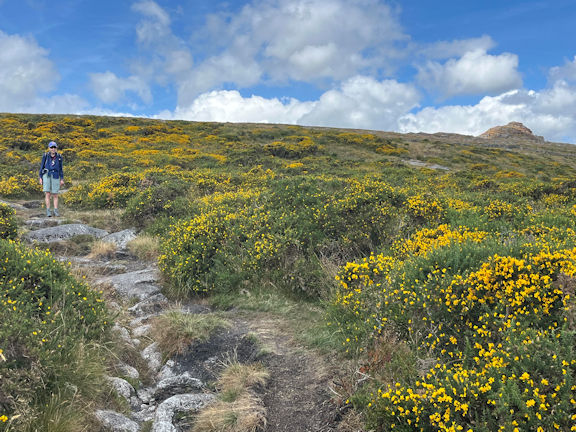
What followed was a delightful traffic free drive across Dartmoor to Princetown, with the late afternoon light showing the moors off perfectly. Having reunited ourselves with the organisational vagaries of the Plume, Heather joined us and after an unremarkable fish and chip supper we had a walk around the almost abandoned prison end of the town. (In my opinion it beggars belief that with our prison system clearly struggling to house everyone that this purpose-built incarceration facility cannot be maintained and improved sufficiently to function again and breathe some life into the whole community.) Judy writes: The three of us drove a short distance to the pretty village of Postbridge with its very well-preserved clapper bridge made of large stone slabs. We were early enough to have it all to ourselves and to look into the clear brown river. This brought back memories for me of childhood visits to Dartmoor on family holidays. From here we took a path south through a forest area where we saw several birds, including wrens, and continued up to Bellever Tor, with its nice rocky tops and views around.
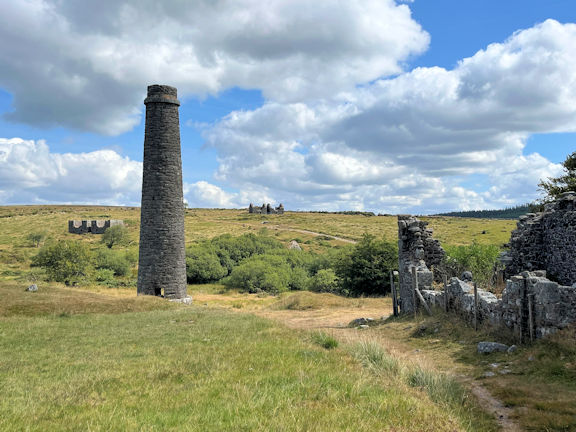
From there we could see a tall chimney and some old buildings, so we followed a path west to investigate. They turned out to be the remains of an old gunpowder factory, with several buildings separated for safety reasons and water leats diverted from the river to provide power for grinding and mixing materials. The tall chimney may have been used to produce charcoal which was one ingredient.
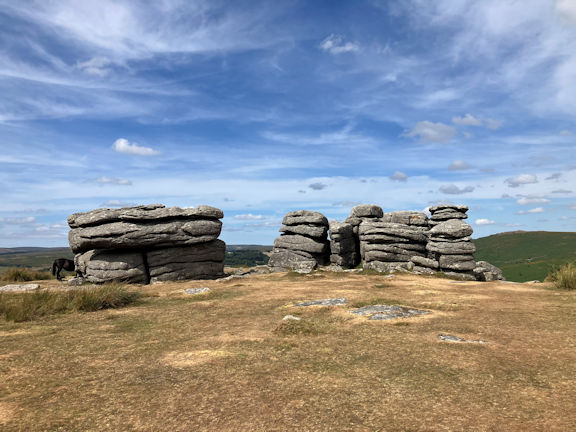
After exploring these, Andy chose to go to Dartmeet via Combestone Tor, but Heather and I wanted to continue up some tors. First we ascended the hill to Longaford Tor, with another nice rocky top and a suitably sheltered spot for an early lunch. We met only two other people, a man and his young son, who had come up from Two Bridges just to the south, and continued past us onto the next tor. After lunch we followed them to Higher White Tor, with a slightly less impressive top but good views ahead to a further couple of tors.
In the evening it was good to have Paul, Andy s son, joining us for the evening and the next day. On the way to pub at Merrivale we stopped to visit some stone circles and some amazing straight lines of standing stones on the hill above. Later Rick joined us for dinner which was a lovely surprise. The Merrivale Inn is famous for its special locally produced grass-fed beef so some people had to eat large amounts of high-quality steak, though the rest of us were also well fed there. A nice sociable evening.
Heather, Judy and I enjoyed a much better evening meal at the other pub in Princetown, the Prince of Wales, and after dropping Judy off at Exeter St. Davids on Monday morning I made my way up to Hankerton in the Cotswolds for a long overdue catch up with your Editor and Anne his good lady wife. Attendees: Paul and Andy Burton, Heather Eddowes, Judy Renshaw, and Rick Snell Report by Andy Burton |
|
Summer Alpine Meet, Klosters, 2 - 9 July
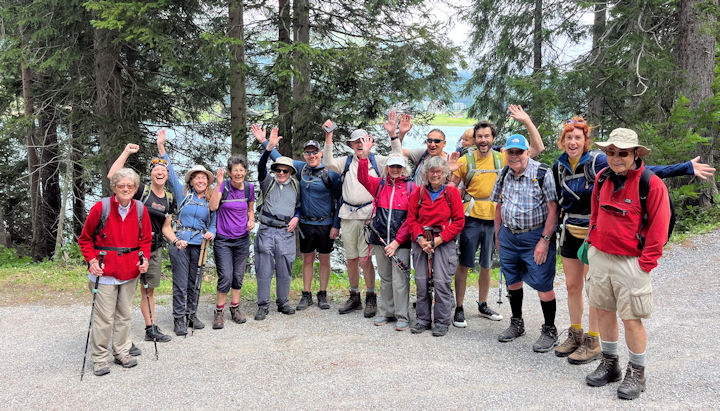
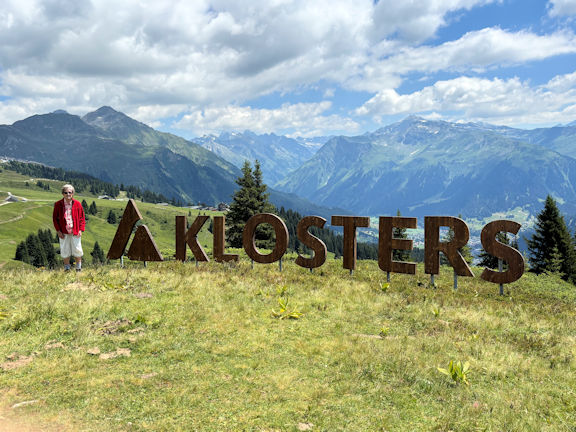
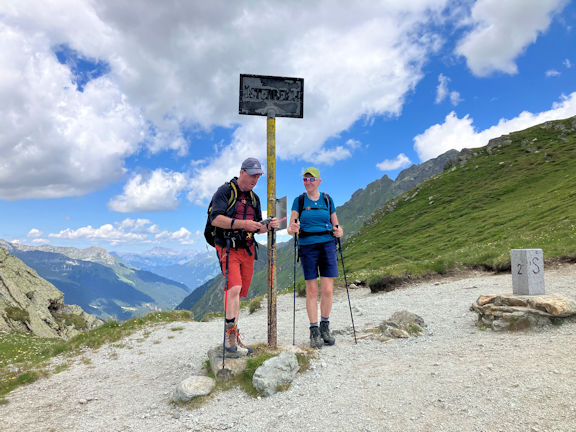
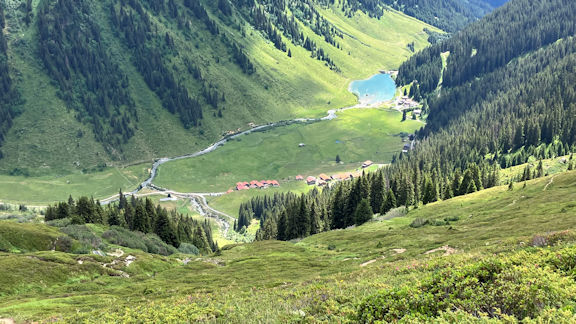
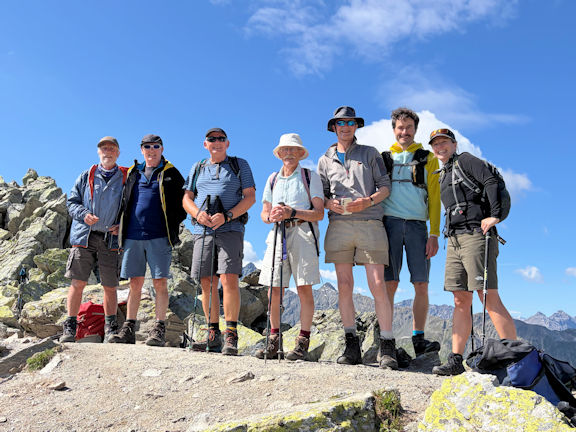
This year s Alpine meet was again held in Klosters, based at the Piz Buin Hotel where we had stayed in 2019. In a central yet quiet location next to the Landquart river, the hotel was even better than we remembered, and Herr Huber and his team went out of their way to make our stay a success. The rooms were large, well-appointed suites, some with kitchenettes, and the complimentary mini bar was re-stocked every day, a pleasant surprise. The balconies overlooking the mountains and river were a peaceful place to relax at the end of a day s walk, as was the swimming pool which was used by many of our group. We started each day with a copious breakfast buffet with eggs cooked to order, and the evening meals were equally delicious and beautifully presented. Andy wrote:
As you will read many things came together to make our second visit to Kloster Platz and the wonderful Piz Buin hotel, a real treat. I suspect that for our current membership we could run a meet there every year without any complaints?! Everybody made good use of the Klosters Guest Card, that gave discounted rides on the uplift.
We started the week with two Birthday celebrations.
Intel was shared each evening and at breakfast between the thirty of us, ensuring each group made the route and group decisions that suited them best. Although to be fair you could just have read Pam s walk suggestions and followed them, as they never skipped a beat as far as I am concerned. Over dinner each evening everyone was briefed over what options were available for the next couple of days outings. After a welcome storm on our arrival day which cooled the temperatures, the first morning dawned bright and sunny so a large group of us took the train to Davos Dorf for the high-level route back to Klosters.
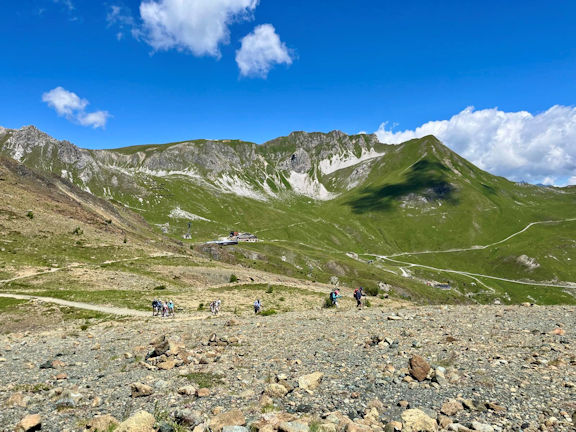
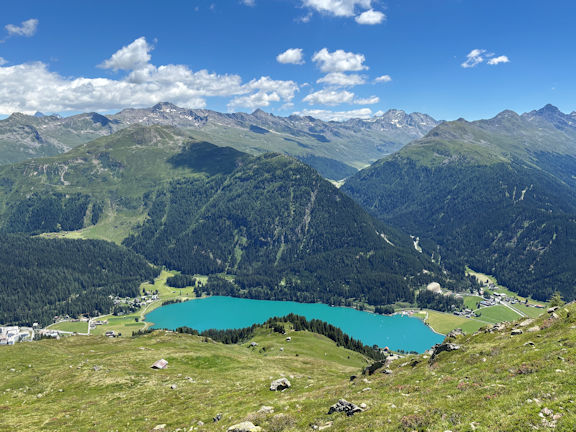
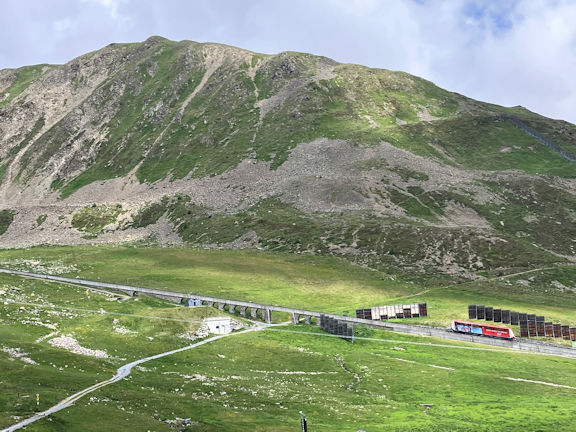
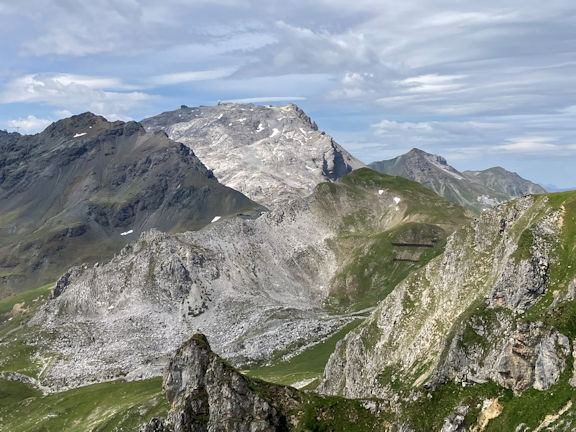
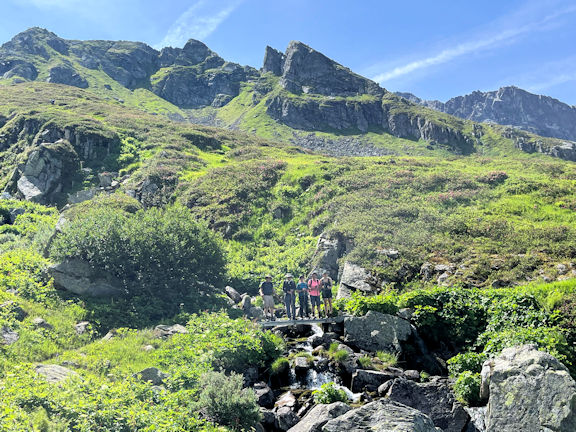
Andy writes: We got off the cable car at the mid-station and made our way through the mixture of hillside pastures and forest to Laret Station, currently being modernised and strengthened against whatever the mountains above care to let loose. Tucked behind the station is the lovely little Schwarzsee, an ideal lunch spot before returning over the railway crossing and walking down to Gruenboedili where there was live music at a busy restaurant. We then followed the Schutzbach all the way down into Klosters, passing the railway car transport depot that leads into the Vereina Tunnel, which connects Praettigau with Unterengadin. This was an easier day that allowed us to enjoy Kaffee und Kuchen on the hotel terrace, (rhubarb cake?) and a little Wimbledon before dinner. During the next few days everyone in the group took the nearest cable-car up to Gotschnagrat, 2285m, from where most of us wandered along the aptly named Panoramaweg. As we neared the Parsenn hut there were spectacular views down onto the waters of the Davosersee below and across to the peaks of the Silvretta Alps over the border in Austria.
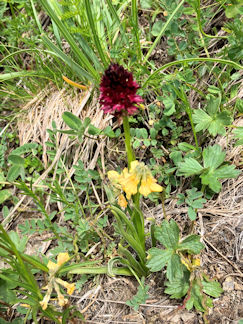
We noticed that the flowers this year were not as spectacular as on our last visit due to the intense heat of the previous weeks, though we did see the alpine favourites of spring and trumpet gentians, alpenrose and moss campion, as well as several varieties of orchids, including the black vanilla, small white and butterfly, with even a few tiny frog orchids. Heather writes: Walking along the Panoramaweg gave us spectacular views and a fun ascent up the funicular train to the col. Andys group also visited the Panoramaweg on their way to the Strelapass, finding the benches on the Panoramaweg with great views well above Davos across to the Jakobshorn and beyond as they ate lunch, with Paul sussing out one of his walks for later in the week with Una. The train journey back from Davos Platz in the company of some mountain bikers who had clearly had an adventure of the wild-eyed kind, gave no clue, other than the steep gradient, to the lovely gorge walk that was available to us all during the week.
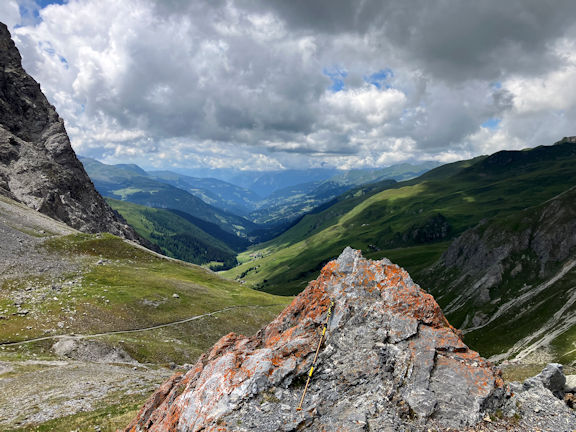
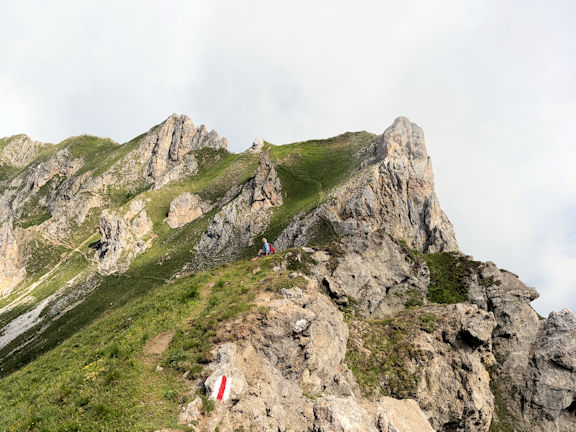
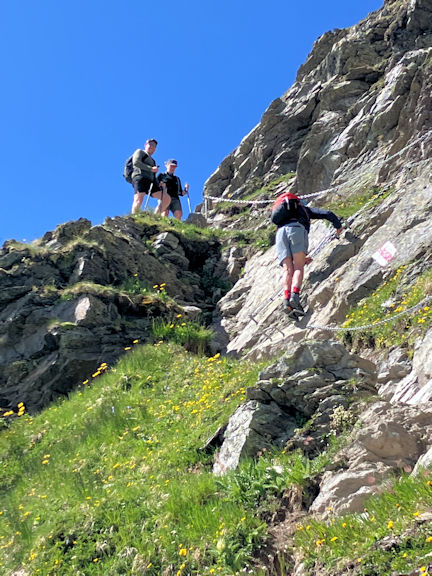
A more difficult route from Gotschnagrat led up the rocky slopes of Casanna and a vertiginous ridge walk, taken by two groups (see Andy s account below) on different days. The descent led down to the Panoramaweg to meet the rest of the group by the middle station of the mountain railway, where there were a variety of possibilities. Some took the train up to its highest point at the Weissfl hjoch to see the ibex and to enjoy the views as far as the Bernina Alps, others continued along the Panoramaweg and up to the Strela Pass before descending steeply to Schatzalp and the funicular back to Davos Platz, while a few took the train directly down to Davos Dorf. Andy writes: Our last walking day came upon us all too soon. We were joined by Jonny who was on a mission to make a new video of his Lofi 2 stove from a suitable lofty vantage point. Taking the lift to Gotschnagrat once more we took the path up to Casanna, 2557m. Jonny went on ahead and was to be seen on the ridge doing his thing and no doubt enjoying a brew, whilst we all made our way underneath and along an interesting path protected in part with wires. By the time we got to Parsennfurgga, 2443m, Jonny caught us up and shot off down to meet up with Mary and Taro at the funicular mid-station. The four of us continued up through the current building site to the Weissfluhjoch at 2662 metres.
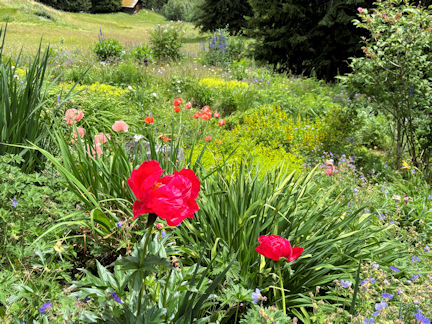
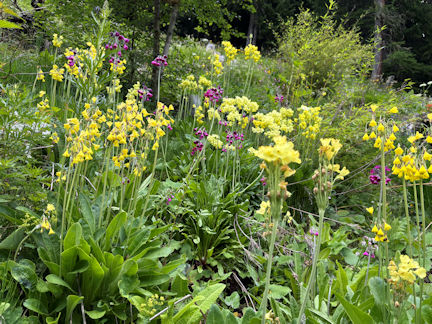
Negotiating our way past the various areas of groundwork and the impressive collection of heavy machinery busy working around the station we made our way through the currently closed facilities to the cable car up to the Weissfluhgipfel, 2844m. Heather writes: Our Klosters guest cards gave us a discounted ascent up the cable car to the Weissfluhgipfel. Switzerland was laid out before us and 21 month old Taro used his Pointing Finger to guide us back down. During the airy transition across the gap Mike pointed out the path that traverses steeply up the face of the Weissfluh, which he had walked up earlier in the week. He did not recommend that we use it as a descent path. Good enough advice for us all to return via the cable car to the funicular top station and take the Parsennbahn all the way down to Davos Dorf for a final train journey back to Klosters, in company with other attendees who were all maxing out their week using the transport infrastructure this lovely area has to offer. Many of us returned to Schatzalp later in the week to visit the alpine gardens at the large hotel there, built as a TB sanatorium in the late 19th century but turned into a hotel in 1953 when penicillin was discovered and TB eradicated. Here there were five different gardens below the hotel, including a herb garden and a glorious border of bright peonies, while the upper garden with beds of alpines wound steeply up the hillside. Here we found several beds of edelweiss and a spectacular display of Sikkimese cowslips interspersed with iris, but we looked in vain for the bright purple Tibetan slipper orchid we had found on our visit in 2019. This year we found only the seed heads, yet another sign of global warming. The Thomas Mann Way wound up to the hotel from Davos, an easy gradient to take either up or down, and from the top of the higher garden a contouring path led eastwards to ErbAlp and a small alpine caf before heading down to Davos Platz.
The other lift starting at Klosters went from Klosters Dorf up to Madrisa, though this year Max Peacock was the only person to make the ascent from there up the steep rocky slopes of the R tschenhorn, 2703m the highest summit reached on the meet.
Andy writes: Picking up tips from Jay and Caroline, Michele, Marcus and I walked down to the Madrisabahn gondola and made our way above the massive new solar array being installed above the treeline, predominantly to harness the power of the winter sun. The walk up to Schaffurggli joined a rubble road up to the new ski lift top station cut into the furggli itself at 2380m. Here the view to the east opens into the Silvretta.
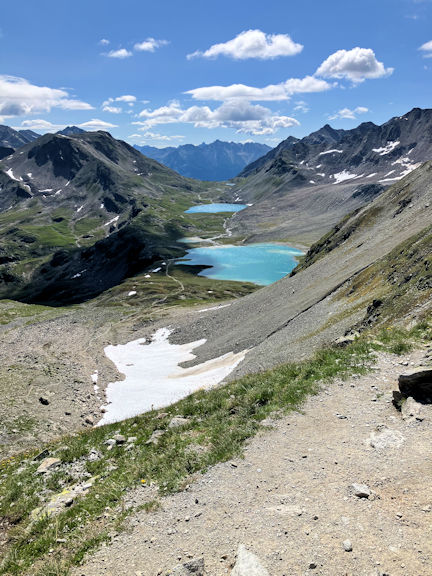
Two walks using minibus transport on private roads had been included in the meet planning, and everyone joined both trips. On the Sunday fourteen of the group set off from W gerh s on the Fl ela Pass road to cross the J rifl elafurgga to the Berghaus Vereina, situated in a quiet secluded valley above Monbiel.
The other walk we made using minibus transport was also beyond Monbiel, this time to Alp Sardasca, into another lovely unspoilt valley.
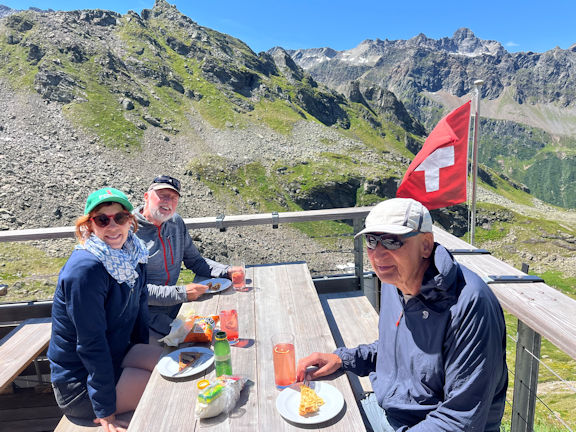
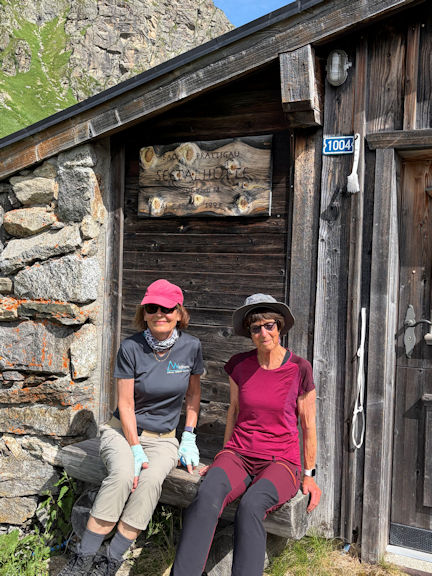
Those of us who had been to the Silvretta Hut in 2019 elected to walk up to the Seetal Hut instead, only 420 metres above Sardasca. This is a small SAC hut with no warden but with ten bunk beds and cooking facilities. As we were relaxing outside, a young Swiss family arrived to spend the rest of the day and the night there, their four-year old child having walked all the way up.
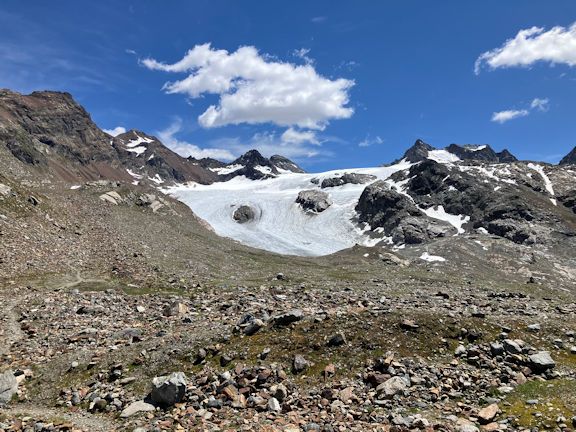
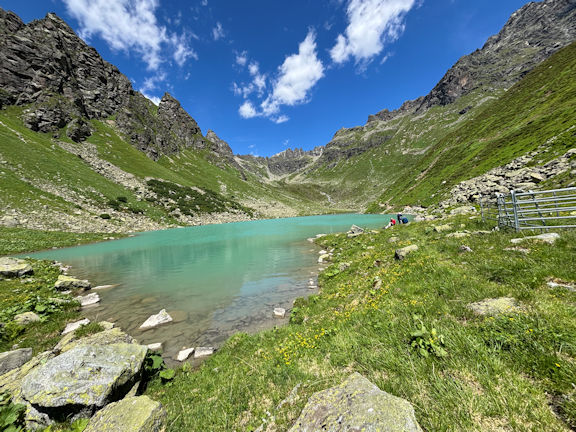
Our group continued just a little further to the nearby Seetal Lake nestling amid the mountains, an idyllic spot for our picnic lunch. Meanwhile, Bill Westermeyer and his group had raced on ahead to reach the hut from where they continued up to the ridge 600 metres above on a circuit which proved to be their most demanding exploit of the meet.
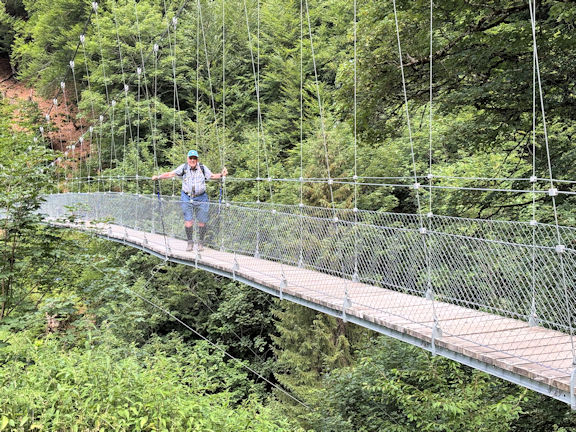
There were lower-level walks too...
Participants: Pamela Harris & Alan Norton, Daniel Albert, Andy Burton, Heather Eddowes, Mary Eddowes & Jonny Taphouse with Taro, Phil Hands, Don Hardy, Richard & Katherine Heery, Roger James, Margaret Moore, Mike & Margaret O Dwyer, Max & Vivien Peacock, Michele & Marcus Tierney, Charlie Rawson & Simon Whatley, Rick & Carol Saynor, Paul & Una Stock, Caroline Thonger, Jay Turner, Bill & Rosie Westermeyer. Report by Pamela Harris with comments from Andy and Bill |
|
Wales meet, Rhyd Ddu, 4th - 7th June
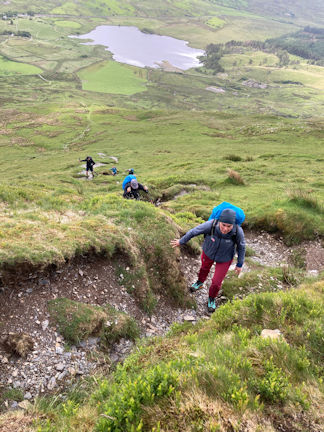
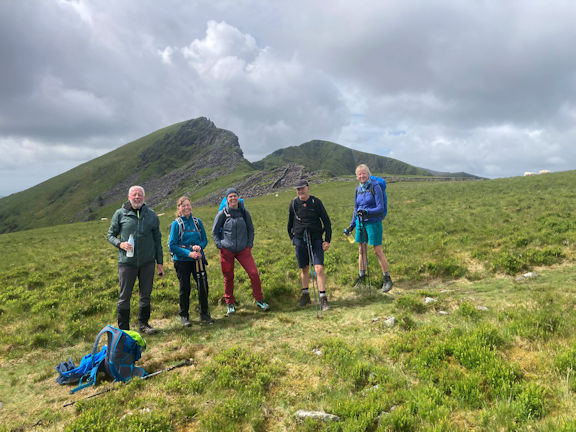
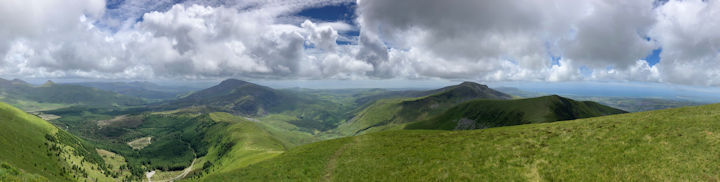
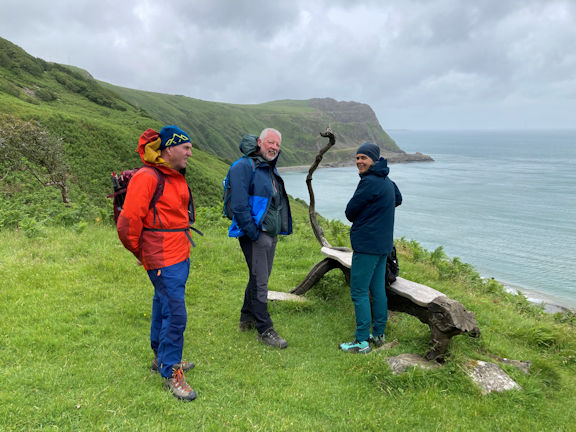
The first full day of the meet saw our group of Andy, Celine, Mike, Margaret, Michele and Marcus heading up the Nantle Ridge, ascending by Y Garn. Despite the forecast rain and a lot of the nearby summits being in cloud, the weather held fine and an ascent was made along the ridge, where there is some interesting scrambling.
Although relatively straightforward a fall to the northwest side would probably result in being killed to death. On the ascent the team were treated to some beautiful bird song coming from a pair of Ring Ouzels which posed conveniently on a rock nearby. We ended the ridge at the Obelisk at Mynydd Tal-y-mignedd. The monument was erected to celebrate the Diamond Jubilee of Queen Victoria. Lunch was taken on the tumbled boulders at the side of the monument.
After backtracking slightly, a descent was made down the ridge above the Cwm Du woods, although the woodland is currently being harvested so not many of the trees have survived in this area. Huge areas had also been storrm damaged so the area looks devastated and reminded me of the Tunguska event of 1908. (Google it, other search engines are available). Notice boards assure the public that harvesting the forest is all part of managing the woodland and it will regrow. The group also saw Stonechats here, again posing on the trees for us as we passed by. We eventually traversed back under Cwm Marchnad back to the hut where tea and cake was kindly provided by Don and Judy. We all agreed that the mountain gods granted us some divine favour as we managed to stay dry all day and enjoyed expansive views from the tops. On Saturday Mike, Michele and Marcus decided to walk to Beddgelert but whilst wanting to do a little elevation we really wanted to stay under the cloud level as winds and rain were forecast all day. We headed off from the hut over the railway line and up the Rhyd Ddu Snowdon path to the junction at Pen Ar Lon. The right path leads to the large, quarried area at Bwlch Cwm Llan. By this time the rain was quite steady and there was already quite a windchill. The route descended towards Cwm Lan and the Watkin path. We passed many Duke of Edinburgh teams in various states. Some were driving forward with purpose whilst others were head down and grinding it out with their huge 65 litre Vango rucksacks adorned with camping mats on their backs. What was nice was that we saw several instances of the groups helping each other along with encouragement and also physical assistance at times. Credit to them and we tried to give them encouragement by telling them that there was free ice cream shop when they reached the top of the next hill. We continued with a slight diversion to the top of the incline at Bylchau Terfyn before descending the Watkin path to the cafe at Bryn Dinas. The cafe is built in an old chapel and they have retained a lot of interior features so you can actually have your coffee more or less on the pulpit. We were able to take off our soaking wet waterproofs and enjoy coffee, tea and a scone (pronounced like stone not gone) before heading off again.
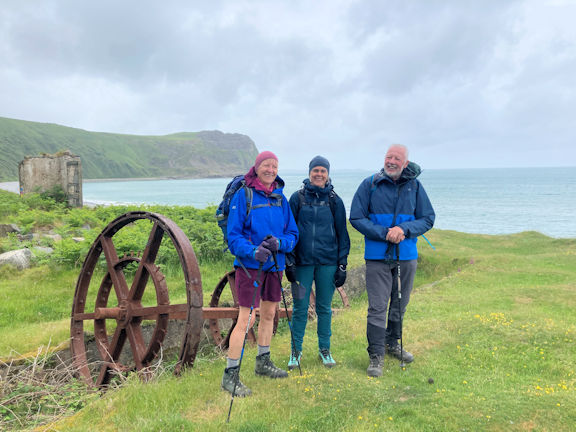
After ice cream we returned through the Beddgelert Forest or rather parts of it as some of it as mentioned before is now Beddgelert reforest. Another day where despite an initial soaking we enjoyed some weather that really wasn t expected; so another bonus day. On Sunday the mountain weather was again not looking too good so a group of us went totally off piste. Heading towards the coast, Andy, Celine, Mike, Margaret, Michele and Marcus met at the car park near Mount Pleasant close to the village of Llithfaen. From here we descended steeply to the Welsh Language and Heritage Centre at Nant Gwrtheyrn. After a brief look at the impressive complex of meeting halls, cafe and holiday cottages of this well renovated and repurposed former granite quarry community, we continued on the Wales Coastal path with beautiful views out to sea. Our path continued to a small settlement again with some impressive new builds at Pistyll.
We returned via the North Wales Pilgrims Way back to the car park. Looking back we could see the Nefyn peninsula. After reaching the car park Andy and Celine headed off to get Celine to the train station on time, and the rest of us enjoyed a coffee and cake at the Heritage centre. This area is highly recommended for a trip when the weather is inclement in the mountains. Many were the days that it would rain all day in the pass (Llanberis to non-climbers) but we would still enjoy a full day climbing at Tremadog or Gogarth. The hills above Penrhyn Glas and Gwylwyr Carreglefain (don t ask me to pronounce that, ask Dave) look very inviting and we shall certainly return to this area when the mountains are out of sorts. On Friday Judy went along the ridge of Foel Goch, Foel Gron and Moel Eilio from the hut. The route towards the Snowdon Ranger path was extremely wet and boggy after recent rain, though it was reasonably well marked with signposts but the ascent was easy to follow as it goes up steeply from the col towards Llanberis. The early cloud lifted so even the top of Snowdon was clear, with a steam train making its way to the summit. Along the ridge tops it was cold and windy with a very welcome shelter on Moel Eilio. The views were magnificent, across to Anglesey, south to the Llyn peninsula and back to the high tops in central Snowdonia. Cuckoos, skylarks and buzzards could all be heard. She took the descent to the north then followed the Slate Trail back to Waun Fawr, investigated the Rail Ale festival as it was being set up and took the bus back to Rhyd Ddu. Saturday was forecast to be extremely windy and showery so Judy walked into Beddgelert through the forest, as did Celine, Margaret and Andy, and watched the steam train pass as it left the town and wended its way through the woods. Judy continued to the Aberglaslyn Gorge then took the path from Nantmor above the copper mines, an area that is always fairly quiet although there are paths through it. After a rapid lunch stop, as a shower could be seen heading that way, she descended on a steep path to the coppermines visitor centre. This took a while on slippery rock, with extremely wet bushes to push through. Then into Beddgelert where she met up with several of the others and took the train back with Heather and Dave.
Sunday was wet from the start in Snowdonia but dry in other places. Judy and Don drove to Attingham Park near Shrewsbury where they met up with a friend for a walk around the deer park before heading home. Heather and Dave write: Friday we decided to have a look at Caernarvon en route.
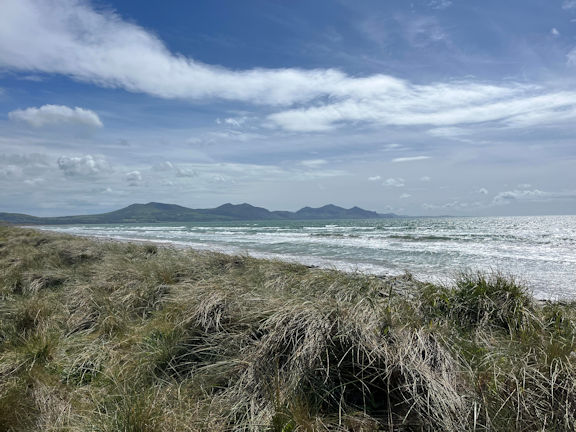
In particular we took a walk around the outside of the town walls and the harbour. All interesting to see along with the old town streets. No time for the castle itself, saved for another visit. Despite the wind blowing hard we drove south to Dinas Dinlle on the coast, a little south of Caenarvon, as we d decided to walk via the dunes and road, to the end of the headland and take a look at Fort Belan built 1775 (warning - after a 1 hour traipse there we were denied entry as it is Private!) However, the tide was in and the sun shone and we were rewarded with fabulous views over to the Snowdonia range, Anglesey and the Llyn Peninsula.
We were then off to Rhyd Ddu to settle into the Oread MC s hut then a delicious meal with the gang at the Cwellyn Arms.
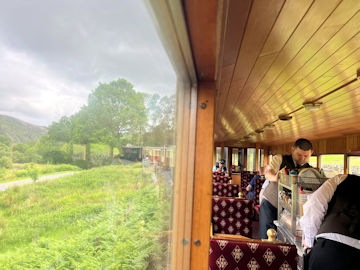
Saturday - Drizzle & wind kept us low and Dave, Don and I followed the trail to Beddgelert. Occasionally the mountain tops appeared. However, we had a grandstand view of the Welsh Highland steam train chugging its way uphill towards Rhyd Ddu. Around halfway Don donned his waterproof trousers, Dave followed suit but somehow lost his binoculars (have you seen them?) Don & I continued whilst Dave backtracked, unfortunately to no avail.
Attendees:Andy Burton, Celine Gagnon, Judy Renshaw, Don Hodge, Heather Eddowes, Dave Matthews, Mike & Margaret O'Dwyer, Marcus & Michele Tierney. Reprt by Marcus, contributions from Judy and Heather. |
|
Arran meet, Lochranza, May 13 - 19
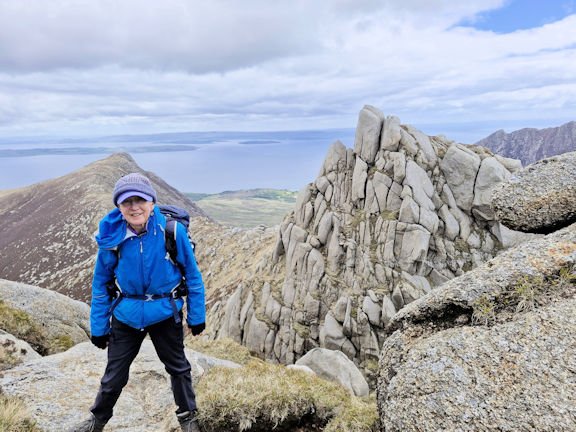
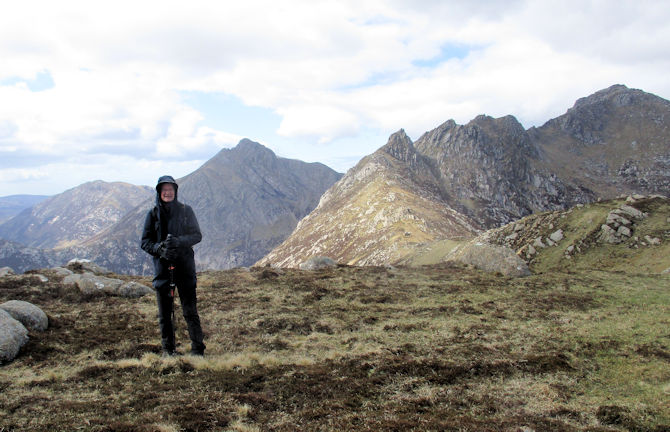
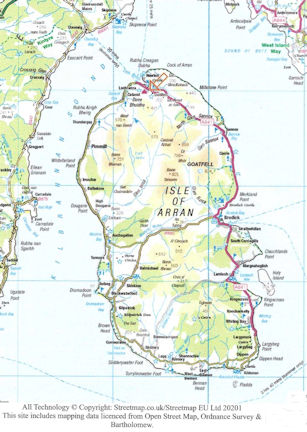
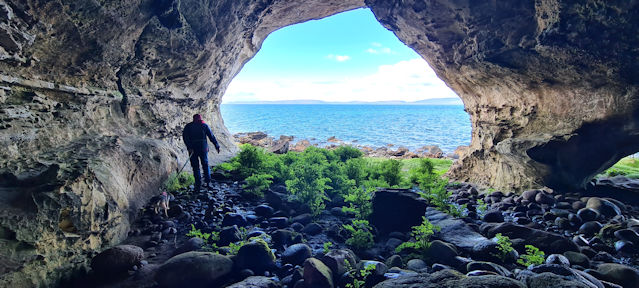
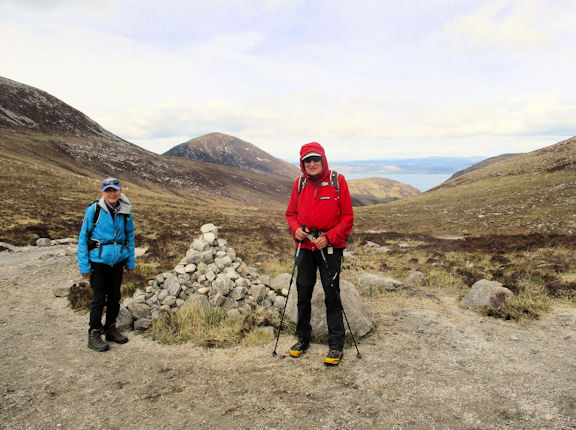
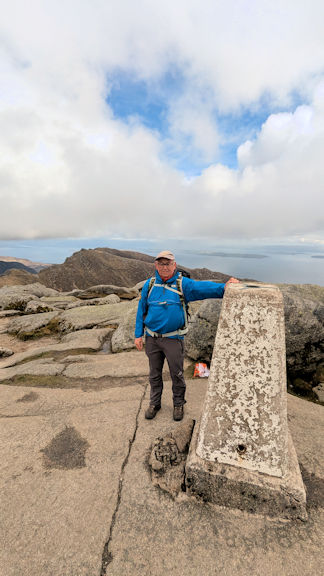
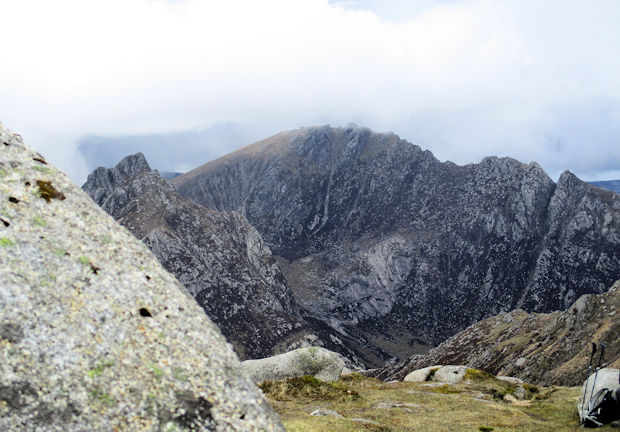
Eight people and one dog attended the Scotland Spring meet in 2026, based at the SYHA hostel at Lochranza on the island of Arran. Daniel and Nicola had booked separately into a hostel room where they could have their dog Kim with them. We were unbelievably lucky with the weather as we did not get any significant rain on us, though there were showers forecast every day and some did fall at night and in the early mornings. However, it was quite windy much of the time and cold on the tops. Most of us arrived on the Wednesday afternoon or evening, although Max had been on the island a few days earlier and took advantage of some clear, dry weather to do two routes.. Arran is a recognised Geopark, which provided additional interest to the trip. On Sunday, Max climbed the ridge to the west of Glen Rosa - Beinn Nuis, Beinn Tarsuinn down to Beallach an Fhir-bhogha and back by Beinn a Chliabhain. Fine but there was avery cold north wind on tops. It was mostly walking, with a bit of easy scrambling to get down from Tarsuinn.
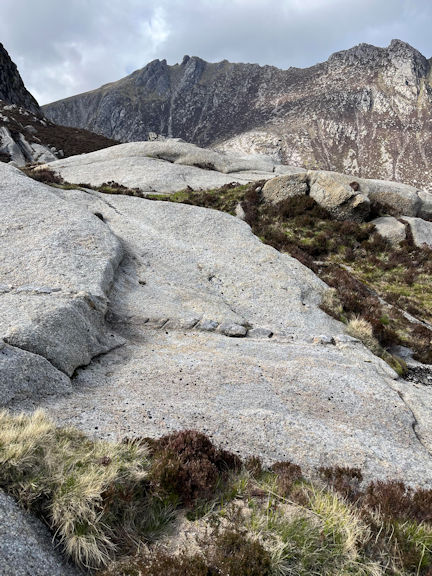
The forecast for Friday was better, so Max and Judy took the opportunity to do a more serious ridge route above Glen Sannox, which involved a scramble into and out of the infamous Witch s Step on Caisteal Abhail. From the path along the glen they headed up the hillside across tussocky grass, eventually meeting another path from North Sannox and up onto the top of Suidhe Fhearghas.
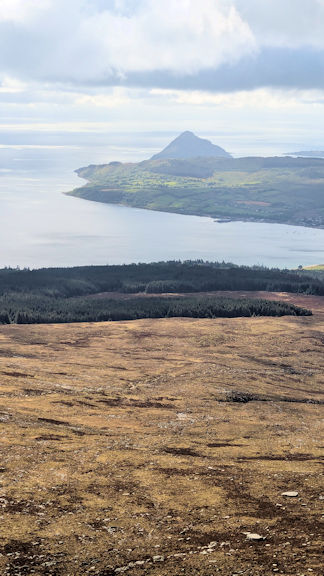
After a suitable lunch stop in a sheltered area below the top they descended to a col and went over the next top, Cir Mhor (799m) on a good path and down to The saddle between Cir Mhor and North Goatfell. The good path continued down for a while then disappeared into a typically Scottish descent with rock sections and drops with no obvious route down. The guide book had described this part as not without interest! They finally made it down to the glen and a along pleasant path back to the car, have taken almost exactly 8 hours for the full route. Philip, Roger and the two Davids walked from Glen Easan Biorach onto a minor summit, Torr Nead an Eoin above Lochranza. Although only 330m, the views were extensive, including the Paps of Jura and Islay.
The two Davids went up Caisteal Abhail from North Glen Sannox. They followed the constructed path up into the forest, where the burn has some fine waterfalls and deep pools. After exiting the forest the views opened up to reveal the ridge of Caisteal Abhail at the head of the Glen, with the sharp cleft of the Witches step visible to the left. They continued along the Glen, crossed the burn and after a rugged climb reached the ridge of Sail am Im and continued to the summit of Caisteal Abhail. After lunch they retraced their steps and found a better footbath from Sail am Im down into the Glen, crossed the burn and descended through the forest back to the car park. It was a great walk with lovely weather .
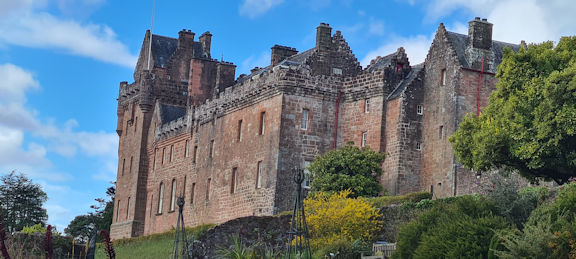
Nicola wrote Having completely exhausted our small dog we spent the day at Brodwich castle, exploring the grounds and woods and drinking tea. We had a brief stop at the Arran distillery where we were assured that we would not have affected the flavour of the whisky by walking past Loch Na Gavie the previous day!
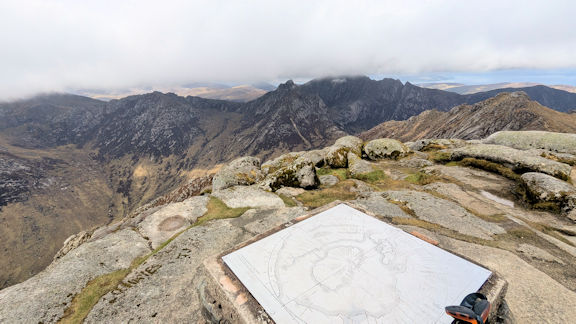
On Monday, our last day, David, Philip, Roger and Judy took another route to the highest of Arran s tops, Goat Fell and North Goat Fell (818m). They set off from a roadside parking area near High Corrie, taking a steep but pleasant route up through forest and around into an open valley following the Corrie Burn. From the edge of the forest Judy continued up towards the col and on to the top of North Goat Fell, with some brief scrambling over boulders to the summit. She continued over and around a couple of towers, taking some of the slightly easier options, as the rock was a little damp and the friction less good. At the top of Goat Fell a few more people appeared, then gradually more arrived from lunchtime onwards. The views of the other ridges were wonderful and also atmospheric with some partial cloud drifting around and clearing sufficiently to see in all directions.
Daniel and Nicola had left on the Monday but everyone else took the mid-morning ferry to Ardrossan, said our goodbyes and headed home. It had been an excellent meet which we all enjoyed. Arran has much to offer and there would be enough to do if we were to go back there on another occasion. Present: Daniel Albert, David Blackett, David Clear, Judy Renshaw, Kim Albert, Max Peacock, Nicola Albert, Philip Hands, Roger James Judy Renshaw with contributions from others |
|
Grinton Memorial Meet, May Day Bank Holiday
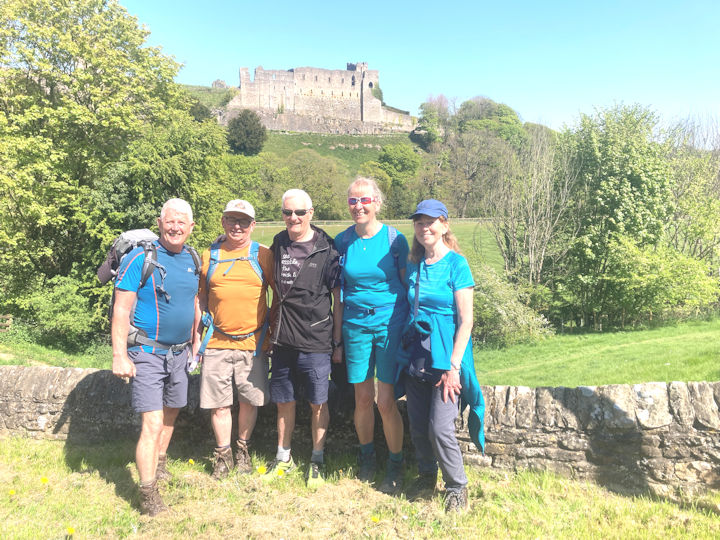
This year s May Day weekend meet returned to where the idea for this meet first started, the Yorkshire Dales. In 1995, Ed Bramley organized the first Family Camping Meet at Fearby, near Masham. Your Editor has kindly revisited the archives and provided photos and background on how it began. In September 2022 at short notice Ed took over the organizing of the last meet at Grinton Lodge YHA, after David Clear was injured whilst mountain biking a few weeks prior. Please see the 2023 Journal for Ed s report of that excellent weekend. We wanted a Meet to remember Ed by and after some discussion with Janet(Ed s wife) and Adrian(Ed s brother) who lives at Skeeby, it was agreed that Grinton would work best for all of us, so we made it so. The two Dave s, Mike, Margaret, Marcus and Michele met at the car park on Nuns Close Richmond on the Friday of the meet. There were prior requests for breakfast as the Southish contingent had travelled up that morning after an early start, so a short walk found the group in the middle of Richmond. A lovely little cafe just off the Market place provided a really nice breakfast which included some amazing lamb and mint sausage.
On Friday Steve Creasey set off from the New Forest at 5am, arriving at my pad before 9am, leaving time for a bacon butty and a cuppa, before decamping his kit into my car and setting off to collect Mr Caulton enroute north out of the shire. Three hours later we found ourselves parked and wandering around the centre of Richmond looking for a caf . Advice from a local directed us to Granny s Kitchen on Finkle Street for our lunch.
The YHA is a former hunting lodge purposefully built in 1817 to stand in the middle of a grand shooting estate on the slopes of Swaledale. It remained in private hands until after World War II when it was sold to the YHA and has been used as a youth hostel ever since.
Saturday morning everyone was up and breakfasted, before gathering outside to meet up with Janet and her family at the hostel gates from where the days walk would begin and finish. It was great to see them all. Jen and Stu had invested in some Skye Batik trousers, channeling their inner Ed, with George, 6, Isla, 3, and Simon and Emily with little Daisy (only 8 months old). Close behind them came the four M s tromping across the moor from their AirBnb about a mile away. After a quick meet and greet David Clear led most of us out across the moor, as recounted here by Steve Caulton.
Pretty much at the same time as we took our leave of the historically antisocial Mr Caulton, Jen and Emily elected to return to base with Isla and Daisy, whilst George valiantly continued on with the support of his Dad, Grandma and Uncle.
The YHA group waited for Mr Caulton to arrive back and entertain us with the below continuation of his part of the days story.
On Saturday Rick and Alison had elected to do some rock climbing on Crag Willas, a small crag set in splendid isolation to the west of Reeth. They started by doing a couple of short climbs at the little edge west of Healaugh, but the wind was whistling over the edge and they retreated with cold hands to do a nice walk around Calver Hill on Reeth Low Moor, returning to the car through Arkle Town and up the delightful valley of Fore Gill. Saturday s evening meal was enjoyed at the Bridge Inn in Grinton where we were joined by Adrian, his wife Rachel and their two daughters Claire and Eleanor swelling our numbers to an entertaining twenty. Sunday morning came with its predicted rain, and everyone set off from the hostel in full waterproofs. David Clear set off first with Mr. Creasey, meeting up with the four M s enroute, whilst Daniel, Judy, Mr. Caulton and I took the Skoda to Reeth. By the time I had put my boots on we were joined by Stu and Simon, who had walked across the fields from their accommodation at High Fremington.
By the time we sat down, taking the top off our first pint, six more thirsty walkers who we knew appeared in the pub. There were only snacks available because during the 2019 storm the Arkle Beck which runs right at the side of the pub rerouted itself through the kitchen, which to date has not been replaced. The snacks worked their intended magic; a second drink was enjoyed. Taking our leave of this spiritual home for the cast of the original series of All Creatures Great and Small, we made our way across the bridge and up to the road. Here we saw further evidence of local efforts to control the flooding. A major spend in road engineering all dressed in local stone, which should blend right in within a couple of years. Just before Arkle Town we turned left and headed back down to walk along the other side of the beck all the way back into Reeth. Before setting off back across the fields Simon and Stu treated us to a homemade treat at the Ice Cream Parlour, which was nice. Rick and Alison enjoyed an entertaining visit to Castle Bolton on the back of Steve s advice. Bolton Castle was a delight, with a falconry demonstration thrown in, then Middleham castle (disappointing), followed by an old persons drive around over Butter Tubs pass, then a delightful walk along the Swale between Ivelet bridge and Muker, plenty of young ducklings in evidence.
Bank Holiday Monday arrived all too soon. Grinton Lodge YHA fed us righteously one more time. With a quick visit to the Bike Barn in Grinton to say cheerio to Janet and her family, the two Steve s and I enjoyed a relaxing drive out of this beautiful part of the country, returning to the Shire in good time for Mr Creasey to be able to continue his long journey back to the New Forest. On the last day Mike, Margeret, Michele and Marcus left the AirB&B at Deer Park just above Grinton.
A further visit for coffee and cake was made to the bike centre at Grinton before the return to Deer Park for a well-earned dinner and drinks. Participants in this memorial meet were: Janet Bramley, Stuart, Jennifer, George and Isla Wood, Simon, Emily and Daisy Bramley. Adrian, Rachel, Claire and Eleanor Bramley, David Clear, Dave Blackett, Stephen Caulton, Steve Creasey, Daniel Albert, Judy Renshaw, Andy Burton (With thanks to everyone who joined in), Michele and Marcus Tierney, Margaret and Mike O Dwyer, Alison Henry and Rick Snell. Report compiled by Andy |
|
The Full Monty, Somerset, April
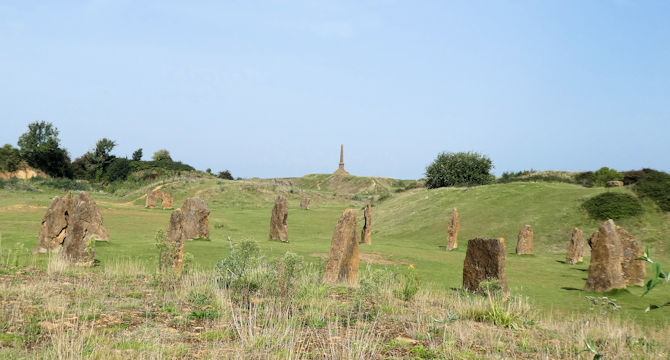
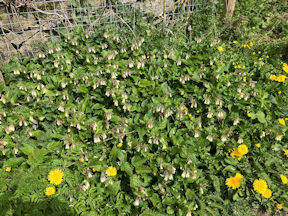
We set off through the golden Hamstone streets of Montactute, past the church, with its C15th century Perpendicular tower, and past the remains of the Benedictine Priory before climbing up to St Michaels Hill - the site of a former motte-and-bailey castle and the last Anglo Saxon revolt against Norman rule, and now a stunning viewpoint with an 18th century folly. As we walked up through the woodland the smell of wild garlic was in the air and the blue bells were putting on a good show. 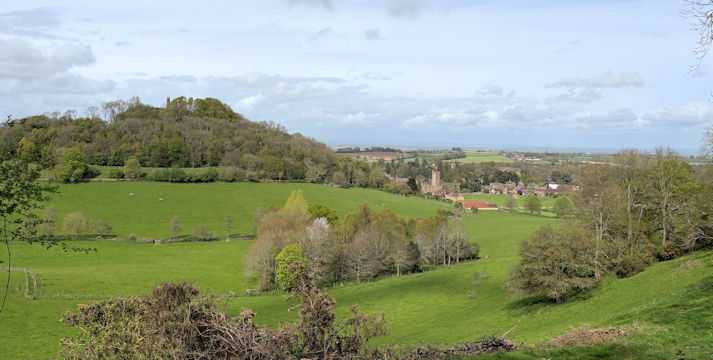 Looking towards Montacute with St Michaels Tower on the left
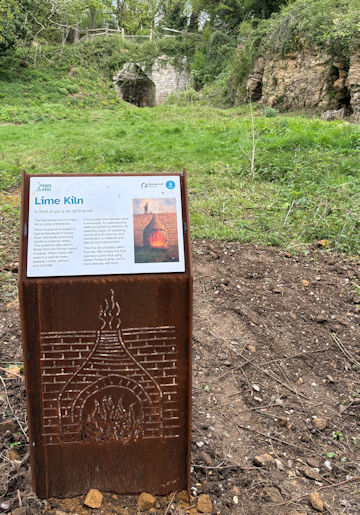
We then headed through the woods to Ham Hill - one of the largest Iron Age hill forts in Britain - now a country park and home to deer, fox, badger and squirrels and many birds and flowers.
We reached the open area at the top of Ham Hill and walked passed the site of a Roman villa, skylarks were singing in the air, before turning south to walk along the edge of Witcombe valley, the site of a deserted medieval village and with some of the best views in South Somerset. Turning back into the woods we followed the edge of the earthworks westwards, before dropping down the steep quarrymen's footpath into Norton sub Hamdon and the excellent Lord Nelson pub for lunch. We all sat in the beer garden and enjoyed a refeshing drink with our lunch. After lunch, we explored the quiet countryside to the south of Ham Hill, returning up the other side of Witcombe valley before dropping back down into Montacute, passing the Prior's fishpond complete with carp, for a welcome afternoon tea at the NT tea shop. 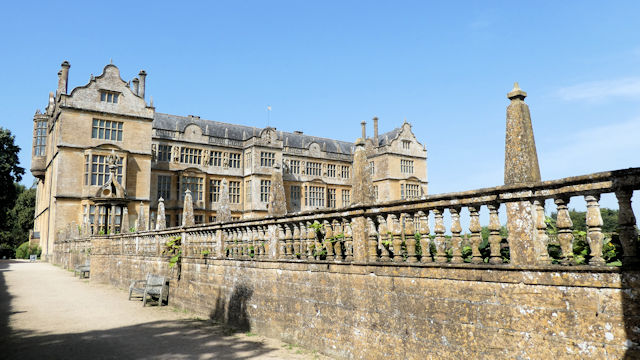 Montacute House
Just over 10 miles in total. The walk covered quite a limited geographical area, but it offers an incredible variety of scenery, wildlife, history and archaeology as well as some remarkably steep climbs! Many thanks to Alison for this interesting and entertaining walk. Attendees: Alison, Rick, Margaret, Julie, Mike and guest Trevor. Report by Alison and Mike |
|
The last scheduled North Walk of this winter took place in the Peak District and the group met at The National Trust car Park on the Longshaw Estate. This car park is in a great location as it s possible to strike out in so many directions and has a cafe and toilets on site. From the car park circular walks can be made as short or long as one should choose, handy when the weather is changeable as it was forecast on the day. Our walk began at the Cafe which we bravely passed intending to have refreshments later.
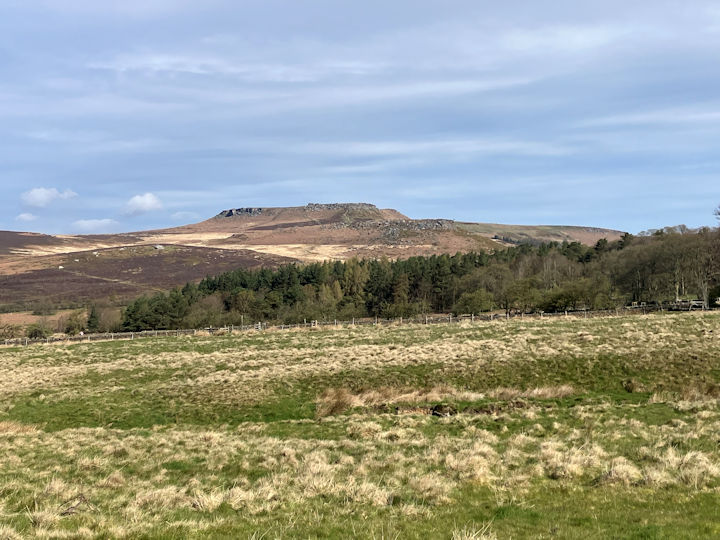 Higgar Tor and Carl Wark
Continuing down to the lake at Granby Wood with great views of Higgar Tor and Carl Wark we continued through the Longshaw Estate to a lovely path that follows the top of Yarncliffe Edge. This path in winter gives nice views up the Derwent Valley and an unusual perspective of the curving railway line before it enters the Totley tunnel. In a few weeks time when the trees are in leaf this view will be hidden. I did spot a Greater Spotted Woodpecker but by the time I tried to point it out it flew off.
After taking on board breakfast with tea and coffee we continued the walk. We passed Padley chapel where each year there is a catholic pilgrimage to remember the catholic Martyrs. A potted account of this tragic story can be found here.
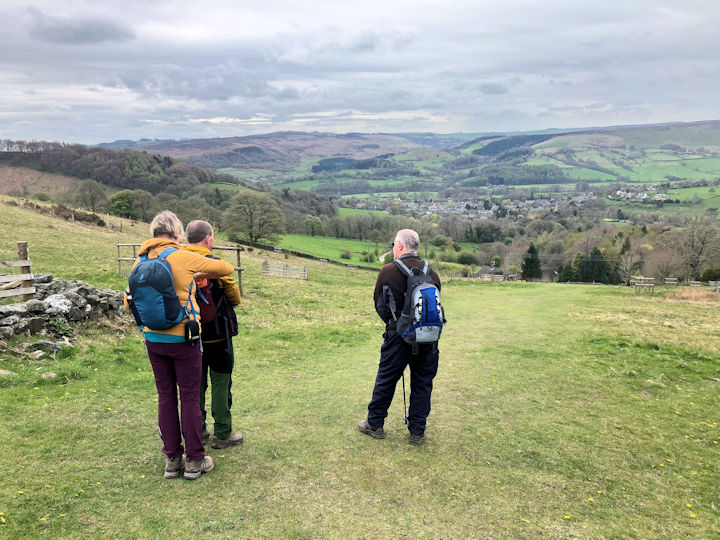 looking down towards Chatsworth from above Hathersage
We continued along the river valley to Hathersage. I am uncertain where the river Noe becomes the River Derwent. What I am certain about is that my winter visits this year to fish for Grayling in this area were completely ruined by high water levels. Of course the river and the fish were happy to taunt me as it was at a perfect level as we passed by. Again resisting the temptation to stop in Hathersage (probably saving us much money by not going into the various outdoor shops) we continued up to Hathersage church where they proudly claim to have the grave of Little John along with its incongruous parking meter next to it. There was a little gentle rain along with the smell of petrichor as we passed through the churchyard.
Continuing steeply we passed Carhead rocks. If you have not been on this modest little ridge I cannot recommend it enough there is a feint path along the ridge which ends at the Stanage Plantation end and it gives the very best view of the popular end of Stanage. Our final climb found us on Stanage edge (the finest gritstone edge on the planet and possibly the universe) where a nithering breeze meant an extra layer was welcome.
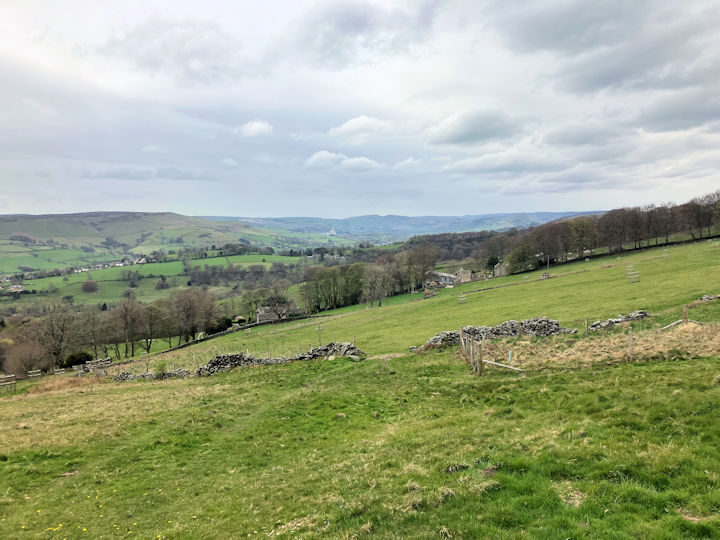 looking towards Mam Tor
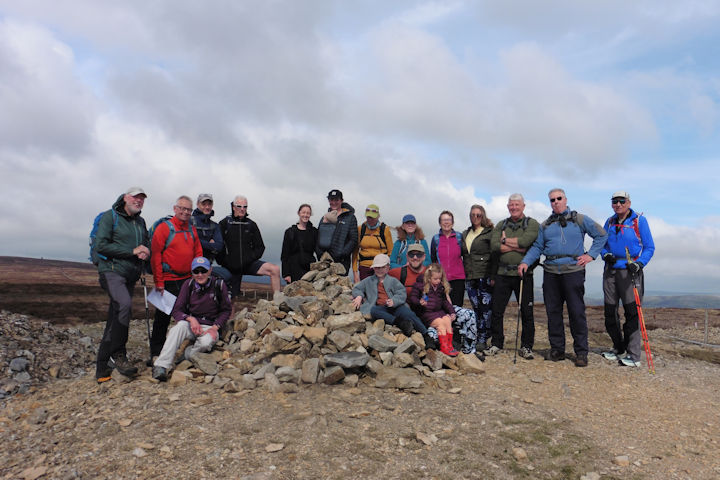
Our now very fresh walk continued past the Cowper Stone an area known for its Ring Ouzels which can usually be seen here and also along the nearby Burbage Edge a bit later in the year when they nest here. The long Burbage drive was followed with continued interest looking at the artillery damage to the rocks and also people practicing the moves on a top rope on Parthion Shot. This iconic rock climb was first climbed by John Dunne in 1989 and given a then grade of HXS 7a, now E10 6c it has been the scene of many an aspiring Hardman s downfall (literally) especially since a crucial flake broke off meaning a ground fall from the crux at the top is more than likely. We eventually reached the end of our just over 10 mile walk back at the Longshaw Estate and this time used the National Trust cafe for tea coffee and cake. The last walk of the winter season in truly spring like conditions. All four of us then battled the rush hour traffic to have a quick pint in Mansfield on our way home. The new season of meets is upon us let s hope for a good year! Attendees: Steve Caulton, Andy Burton, Marcus and Michele Tierney Report by Marcus |
|
Kings Sombourne, Hampshire, March
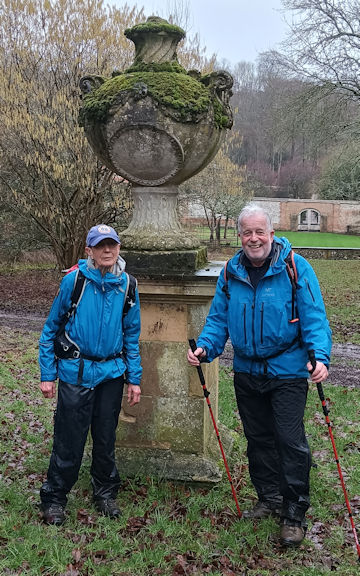
We had a very good turnout for our March day meet with 7 participants, 5 club members and 2 interlopers. We met in the pretty Hampshire village of Kings Sombourne which nestles on the River Test between the larger towns Romsey and Stockbridge. The weather was very kind and presented a dry day with plenty of sunny intervals and great visibility. We set off in an easterly direction across fields and farm tracks around Ashley Manor towards the hamlet of Chalkvale. Luckily the paths and fields were reasonably dry. We picked up a rather muddy bridleway which led us to the West Woods of Farley Mount Country Park. Here we turned south to join the Clarendon Way, an ancient track between the two cities of Winchester and Salisbury. We followed the Clarendon Way to Farley Mount, the high point of our route.
After lunch we traversed Beacon Hill ridge and dropped back down towards Hoplands Cottages following the course of a Roman Road. The final section of our walk retraced our steps back across fields to Kings Sombourne and a quick refreshment in the Crown Inn. Many thanks to club members Mike Goodyer, Margaret Moore, Mike O'Dwyer, Steve Creasey for joining me on this 10.6 mile undulating walk in the Hampshire countryside. Report by Paul Stock |
|
Stockenchurch, Chilterns, February
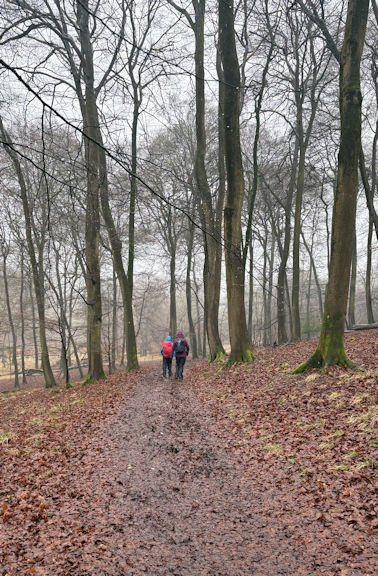
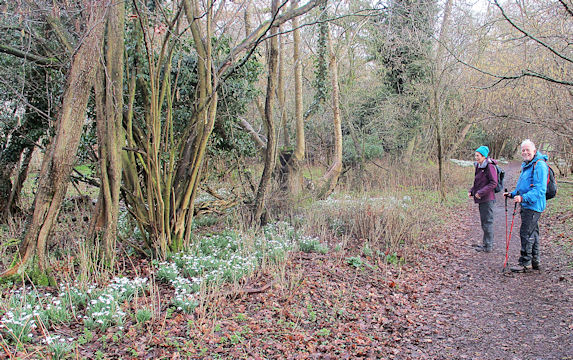
This walk started from Stokenchurch, west of High Wycombe. We had changed the date to Thursday (as per the meets programme) and the venue, in order to make it more accessible to those who were available. We met at Aston Rowant nature reserve in a small car park, as the main one was being renovated by people with several large diggers and masses of mud. From there we took a path down the field, under a bridge beneath the M40 and along the Swan s Way track towards Watlington.
Present: Margaret Moore, Mike Goodyer, Judy Renshaw |
|
Annual Dinner & AGM, Glenridding, February
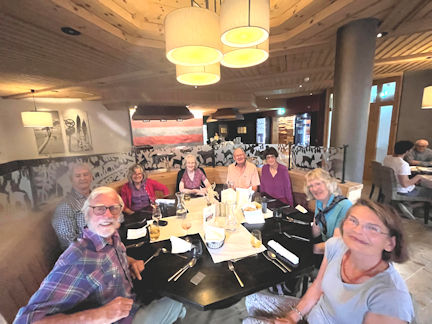
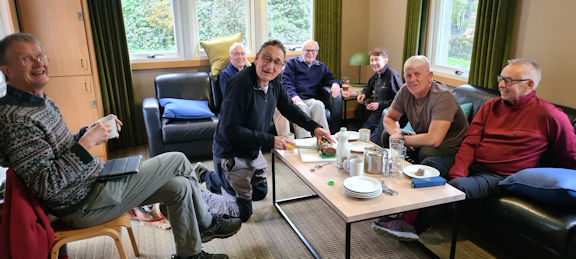
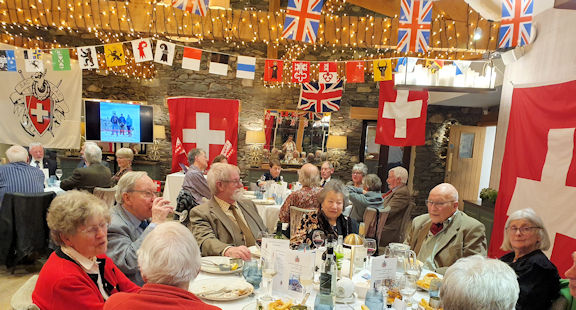
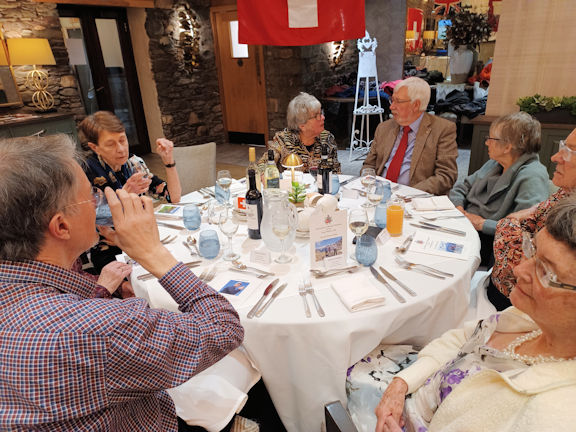
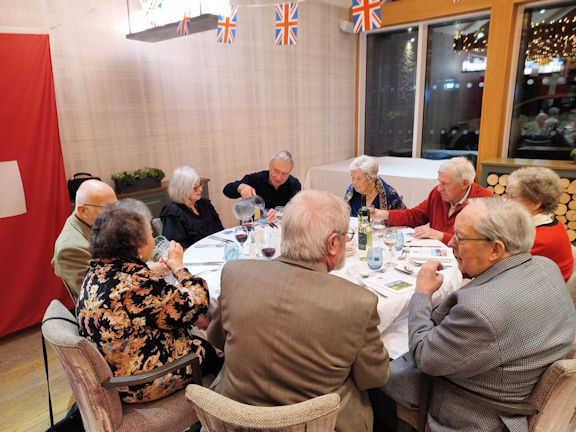
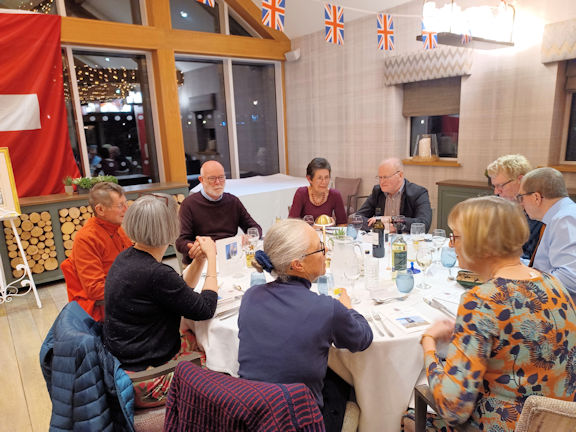
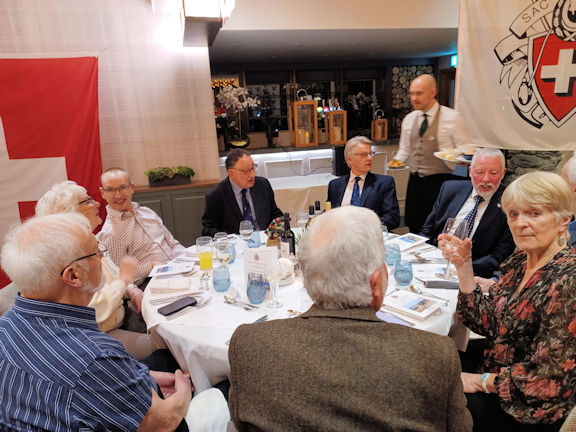
There are essentially two types of club meets. Firstly, those with a plan of activity and everything goes to plan. These meets are easy to record: We all arrived; we all went here or there; we all Then there are the other kind where everyone is really busy doing different things and it all becomes a bit of a whirlwind. I enjoy them both, but the second kind receive little justice from a brief report by someone who only experienced a very small part. So it was with the dinner meet this year. The weather had been magnificent: cold, crisp with even a little snow. But that all changed in the days leading up to the meet. There was still a little white stuff on the tops but the weather had an Atlantic focus. It wasn t terribly wet but never really dry either. And the wind blew enthusiastically. We had 36 members attend the dinner. Also two guests: our speaker, Dave Padgen and the president of the Alpine Club, Duncan Sperry. Eleven members stayed at the George Starkey Hut. The others were dispersed among hotels, bed & breakfasts and their own homes. This led to most of us only meeting up for the dinner itself on the Saturday night. We have decided to address this next year with a shared afternoon activity probably tea and cake at the hut. It seemed such a waste of a rare opportunity to spend times with old friends. The hut team started arriving on the Thursday night, allowing for walking time on the Friday without having to get back in time to make oneself respectable for the dinner. Once again, the White Lion Hotel provided excellent evening meals for those that preferred not to do their own cooking.
The George Starkey Hut provided the usual comfy environment for catching up with old friends, but with some new improvements. The upgraded drying room really does do what it says on the door. It is still waiting for a coat of paint but having dry clothes each morning was lovely. The main luxury item was however the new multi-fuel stove. For now, it is being used only for smokeless briquettes as this is what is provided by the hut company, and to avoid people burning unsuitable sub-standard wood. Compared with the previous built-in stove, this freestanding one gives off a lot of heat. Its warmth was greatly appreciated. On the Saturday evening, we assembled at the Inn on the Lake Hotel for the AGM and dinner. It was a pleasure to meet old friends in the bar before the proceedings. The meeting itself went smoothly with very good attendance. The elephant in the room that we are all getting older without successors in place was briefly mentioned and then ignored.
Many thanks to Don for compiling members memories of Ed Bramley and the annual pictorial account of 2025.
Our after dinner speaker was Dave Padgen. Dave is remarkable for the expeditions he has taken part in, in spite of finding things hard, on account of his cerebral palsy. He was both inspiring and very entertaining. His little speech impediment served to make us listen carefully and become more engaged in the talk than is normal for most of us. It was also an honour to have last year s speaker, our own Pamela Harris, join us all the way from Switzerland.
Many thanks to all who contributed. Particularly to Julie Freemantle who has expertly organised the annual dinners for many years. This was her final year before passing the baton on. Report by Daniel Albert Archived reports from 2001 to 2025.

|